How Does the Tilt Lock Mechanism Base Affect Sitting Posture & Ergonomic Experience?
This article explains how the tilt lock mechanism base supports dynamic posture, reduces strain, and enhances ergonomic comfort in office chairs used across commercial settings.
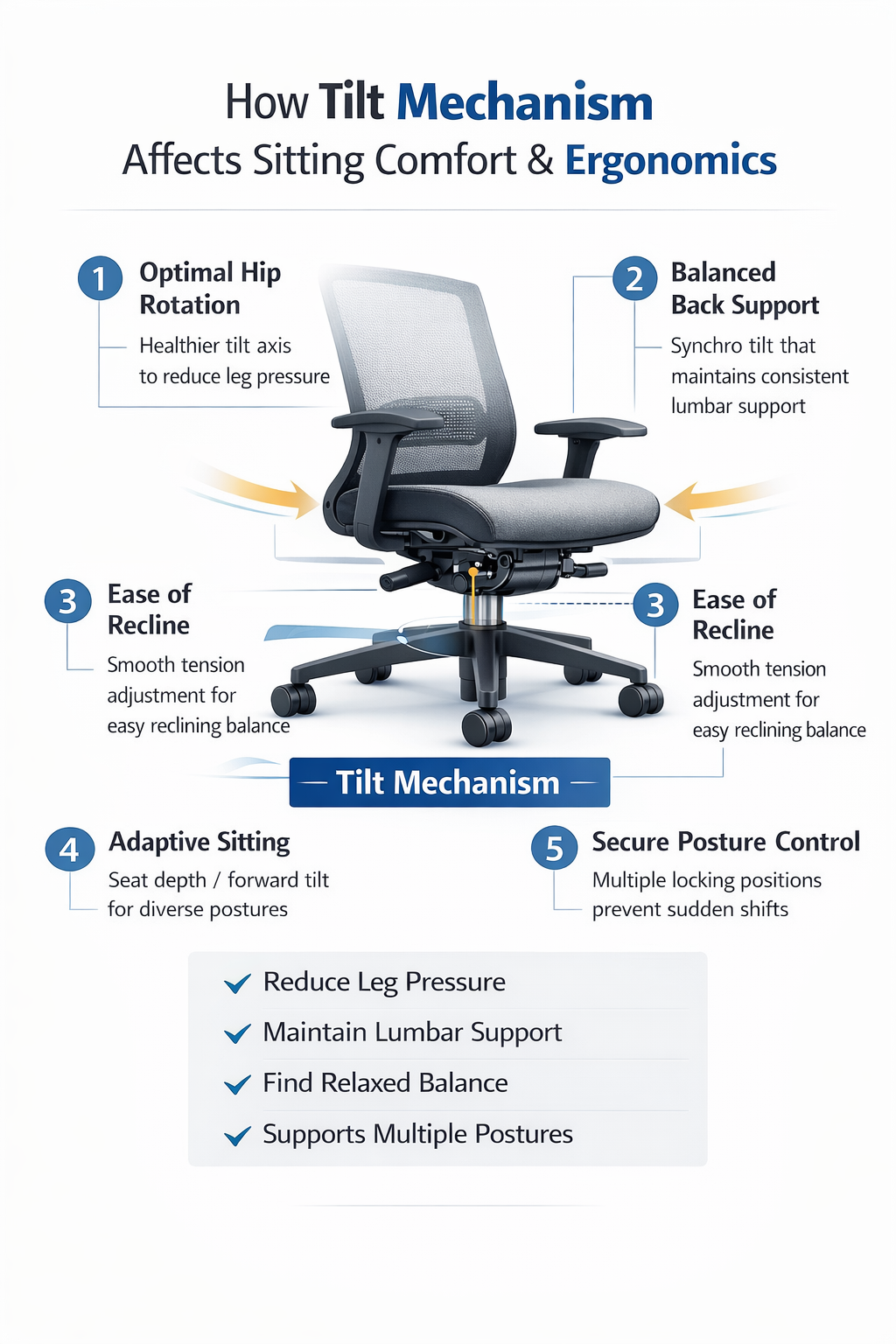
How Does the Tilt Lock Mechanism Base Affect Sitting Posture & Ergonomic Experience?
An ergonomically supportive office chair does more than provide cushioning—it maintains posture, reduces fatigue, and supports dynamic movement. Central to this capability is the tilt lock mechanism base, which directly influences spinal alignment, movement freedom, and personalized comfort. Here’s how this component drives ergonomic excellence in commercial seating.
1. Support for Dynamic Postures
Office chair tilt mechanism allows natural tilting, mimicking spine movement.
Locking positions help users maintain a stable backrest angle throughout the day.
Recline tension promotes active sitting and muscle engagement.
Function mechanism enables quick switches between upright and reclined positions.
Replacement swivel supports micro-adjustments through rotation for task variation.
2. Spinal Alignment and Lower Back Support
Proper tilt base angle maintains lumbar curvature when seated.
Locked tilt reduces pressure on intervertebral discs during long sessions.
Prevents forward hunching by holding optimal backrest angle.
Works with the base to ensure hips stay aligned with spine.
Enables ergonomic chair designs to pass BIFMA and ISO ergonomic testing.
3. Reduction of Fatigue and Discomfort
Distributes body weight more evenly through controlled recline.
Mechanism replacement ensures the same comfort level over time.
Eliminates muscle strain by reducing unsupported angles.
Supports natural leg angle with synchronized seat/back tilt.
Prevents overuse injuries common in static office chairs.
4. Customization for Individual Needs
Users can adjust recline resistance based on body weight and preference.
The function mechanism often includes height and depth controls.
Some tilt lock systems allow 3–5 locking positions for flexibility.
Base compatibility with pneumatic lifts helps maintain eye-level ergonomics.
Replacement swivel options let users rotate without disrupting posture.
5. Corporate Ergonomics Strategy Alignment
Businesses seeking ergonomic certification rely on tilt mechanisms for compliance.
HR policies focused on well-being promote chairs with advanced tilt-lock systems.
Easier procurement alignment when mechanism replacement follows ISO specs.
Supports employees with existing back issues, improving productivity.
Reduces absenteeism linked to poor posture or fatigue.
SEO Keywords: replacement swivel, function mechanism, mechanism replacement, office chair tilt mechanism, base
Tags: replacement swivel, function mechanism, mechanism replacement, office chair tilt mechanism, base, ergonomic tilt mechanism



.png)




_cVJsSf.png)
_GCnBd3.png)